Showing posts with label travel. Show all posts

22 February 2015

Maine - Tell me about that.

While trading email with a friend now living in Las Vegas, he wrote: "Maine. Tell me about that." Okay. Take a ride with me up the Atlantic Highway to mid-coast ME.

We're living in Belfast, a coastal town with much of what one might imagine for a New England coastal town: schooners, lobster boats, tourists. In Waldo County, one of Maine's 23 counties, Belfast Bay is within Penobscot Bay, itself within the Gulf of Maine, and protected from the pounding surf by Deer Island, Vinylhaven and many smaller islands. The towns of Rockland, Camden, Lincolnville, and Belfast make up most of what's considered the mid-coast region. Portland, the state's biggest city at just over 66,300, is south and west while the sublime grandeur of Bar Harbor and Acadia National Park are just east.


The peninsula of northern New England is bordered by New Hampshire to the west and Quebec and New Brunswick, Canada, to the northwest and northeast, respectively. The Atlantic Ocean rolls to the south. The Appalachian Trail begins in west-central Maine, at Mt. Katahdin. About 1.33 million people call Maine home. Most of those people are older than the national average, many don't like us folks who move here "from away." Many are welcoming and friendly.

I arrived in late August for a position at Unity College. The previous July we (wife, child and I) visited for the first time together. The summer vibrancy of Belfast attracted us with its independent bookstores, classic old movie theater, working lobster docks and a rejuvenated ship-building yard. The true Main Street appeal was and is very charming. A small town of not quite 7,000, Belfast has relatively good schools and at least one watering hole that tolerated what emerged as a strong Green Bay Packers bar.

There is a surprisingly strong Wisconsin contingent out here. Among other points of contact, there are nearly a dozen professors of various rank at Unity College who either graduated or taught at UW-Madison. A dozen may not sound like a lot but, as a micro-college (less than 1,000 students) this dozen represents nearly a third of the entire Unity faculty body. Coming from the 40,000-student milieu of UW, the adjustment has been both refreshing and somewhat challenging - but all for the better. It's a good place to be right now.

Getting to work, I drive west from Belfast on 20+ miles of a snake trail that is State Highway 137. At Knox Ridge, I turn north on Hwy 220 towards the town of Unity. Roadkill porcupine were very common in the fall - than I ever thought there could be roadkill porcupine. Like raccoon in the Midwest. Crows are everywhere out here, too. And seagulls. Lately, near Knox Ridge, I've been seeing a few Bald Eagles and at least one osprey. A flock of wild turkeys is not uncommon, scratching around the fallow organic veggie fields common in Waldo County.

This area was a hotbed of the Back to the Land movement of the 1960s - 70s. A renaissance, it seems, is taking place. Younger farmers and ag-industry workers are plentiful. Some have moved up from New York and Boston and, while these trust-fund kids may make nice mainstream media stories, they are not the norm.

Winter. Old Man Winter is a jerk. Most people seem to rely on plow service for snow removal - even for a small driveway. If it snows 8 inches overnight in the Upper Midwest, one can expect to hear a solid handful of snow-blowers out and running by early the next morning. Here, I am the only one. Also, sidewalks. People do not seem all that concerned with clearing sidewalks. Comparisons aside, this winter would be a challenge anywhere. With about 55 inches of snow in three weeks of late January and early February -- and a good 12 to 16 inches since then -- we ran out of places to put snow several weeks ago. Boston, about three hours south, has been hit even harder.

Photo by James T. Spartz (@jtspartz) on

We are settling in. The young miss is in school and making friends. My second semester of professorship is going pretty well. The good wife is looking for work after having finished up a lingering project from UW. We're in a rental house that is a little tight yet adequate enough for the time being. We are definitely looking forward to summer. Spring will be nice, too. They just call it "mud season" up here though, so some new muck boots might be in order.

So, Maine. Yeah. It's okay. My excitement will likely be a little stronger come summer but, for now, yeah, it's okay. Now, tell me about Las Vegas...


02 November 2014

Bhutan, in Fashion.

The New York Times Style magazine has many good features. If you can get past the glorification of affectless nearly post-adolescent models hanging clothes that most people could never afford off their bone and skin frames, redeeming qualities do exist.

In the Nov. 2, 2014 Travel issue, the Higher State of Being piece about Bhutan juxtaposes age-old Buddhist practices with an emerging bicycle culture and the country's measure of Gross National Happiness. Astute observers will also note the irony in stating facts like "The majority of Bhutanese live off the land, practicing subsistence agriculture." within this high-tone glossy magazine spread. Travel porn, if you will, is the currency of this leisure class industry.

Nonetheless, the following quote caught my eye:

To ask a Bhutanese about happiness is akin to asking a Frenchman about wine or a Brazilian about soccer: It is the expected question, the question he is perhaps a bit weary of answering — yet he will gamely respond, unfolding not just a rote reply, but an admirably subtle disquisition. Gross National Happiness, or G.N.H., is the big talking point when it comes to Bhutan. It is also a source of intense debate, a fluid concept which, many Bhutanese contend, is often misunderstood, especially by the outside world.
“Here is the key point to understand about G.N.H.,” said Kinley Dorji, the head of Bhutan’s Ministry of Information and Communication. “Happiness itself is an individual pursuit. Gross National Happiness then becomes a responsibility of the state, to create an environment where citizens can pursue happiness. It’s not a guarantee of happiness by the government. It’s not a promise of happiness. But there is a responsibility to, you know, create the conditions for happiness.”
Dorji said: “When we say ‘happiness,’ we have to be very clear that it’s not fun, pleasure, thrill, excitement, all the temporary fleeting senses. It is permanent contentment — with life, with what you have. That lies within the self. Because the bigger house, the faster car, the nicer clothes, they don’t give you that contentment. G.N.H. means good governance. G.N.H. means preservation of traditional culture. And it means sustainable socio-economic development. Remember, here, that G.N.H. is a pun on G.D.P., Gross Domestic Product. We are making a distinction.”

14 October 2014

Michael Waldrep: Understanding the Meaning of Sense of Place

Nice essay here from one of the inaugural Fullbright-National Geographic Digital Storytelling fellows: Michael Waldrep: Understanding the Meaning of Sense of Place.

Waldrep will take a multimedia approach, using writing in combination with video, photography, and mapping to conduct an in-depth analysis of places around Mexico City.

"The idea," says Waldrep, "is to communicate a sense of this place and to gather together some of the lessons that Mexico City can learn from its own development, and that cities all around the world—not least of all those in the U.S., where sprawl is a fundamental fact of recent and contemporary urban development—can learn from as well."

It will be very interesting to see how all five of the Fullbright-National Geographic scholars develop their own unique project.

11 September 2014

Getting Back on the Moose Track.

You may be stopping by The Topophilian because of a recent profile posted by my awesome alma mater - the University of Wisconsin's Department of Life Sciences Communication. That's nice. Thank you. You may also notice that this blog really has not been updated since July. Surprise! I've been busy! With all the dissertation defending and the packing and the moving and the new position at Unity College, well, there's just not been much time for blogging. This may or may not strike you as a reasonable excuse. I don't care. I'm sticking with it.

Yet, this is a kick in the pants to get back on the horse and keep writing. Though, perhaps, maybe getting back on the moose is more appropriate (and less cliche). Why? Because I saw a moose yesterday. Yes, really. It's in this picture, just barely. It was a juvenile bull moose just trotting down Charles Street here in Belfast. And, yes, I was shocked. Better than a cup of imported EVP coffee at 6:25am on an otherwise average Wednesday. But, I digress. I want to back to writing about this thing called place - place attachment, place meanings, sense of place, space and place. All that stuff. Good stuff.

There is such a strong local food culture here in Waldo County, Maine. So many people connected to the land. Terroir and all that. Many people doing many great things. There's so much to say. I just need to stop being so busy and add this to my list of things to do. I will. I promise. After I re-read that section of Omnivore's Dilemma and set out a lesson plan on Spotify and prep for this People's Climate March trip to NYC. And health insurance. Need to get health insurance. Then. Yes, then. Then I will blog. I will. It offers little in the way of external validation and about as close to nothing as one can get in the way of academic advancement, but I will get back to it. Why? Because other than sitting around and singing and stomping my feet with a hollow-body Gretsch turned up to 11 through a Mississippi-made tube amp with a 16" speaker, it's one of the things I enjoy most. That's what I'll be doing. What will you be doing?

17 June 2014

National Wildlife Refuge Top Picks

The folks over at Plain Adventure have put together a list of their Top 10 National Wildlife Refuges.

These sometimes overlooked natural areas provide vital habitat and recreation for animals and their human admirers. So many great places, including the Wichita Mountains NWR in Oklahoma, Charles M. Russell NWR in Montana, Bosque del Apache NWR in New Mexico... Okefenokee, Kenai, Chincotegue, Kilauea Point. Familiar names, perhaps. Incredible environmental treasures - absolutely.

One they must have forgotten, and an all-time favorite of mine, is the Upper Mississippi River National Wildlife and Fish Refuge. Flowing through the driftless bluffs of Minnesota, Wisconsin, Iowa and Illinois, the UMRNWFR is a river sanctuary suitable for the dreams of ol' Huckleberry Finn himself.

25 April 2014

SEE AMERICA!

I just love this collection of SEE AMERICA art, a collaborative project between the Creative Action Network and the National Parks Conservation Association.


The series captures essential elements of nature, demonstrating the value of its preservation, through relatively minimalist design. The prints are visually striking, using simple multi-tone color schemes and often a woodblock print style.

Focusing on many of the charismatic megafauna and other intriguing creatures -- bison, moose, mountain goats, whooping cranes, loons, wolf, grizzly bear, wild mustangs, and more -- these images capture unique senses of place from regions across the country.
With the centennial anniversary of the National Park Service approaching in 2016 and the continued threat of budget cuts today, Creative Action Network put out a call to its community of artists and designers around the world to create a new collection of See America posters for a new generation. The posters will highlight natural, cultural and historic sites across the country depicting our shared history and encouraging individuals to reconnect with these places. CAN has partnered with the National Parks Conservation Association (NPCA), who stepped up to sponsor and support See America. - See more at: http://seeamericaproject.com/pages/about-us#sthash.z9G9qivt.dpuf

09 July 2013

Of Horses and Men (and Women)


"The outside of a horse brings out the best of the inside of a man."

These wise words were spoken by my dad's cousin's wife's father, a man I've never met. But they get straight to the value of working with animals of all kinds -- to "bring out the best" in our own humanity. Animals can bring us to a place of inner peace difficult to find among people.

Place is something "out there" no less than it is something on "the inside of a [hu]man." We bring to spaces our own set of feelings and thoughts. Places become special because we feel differently having been there. Perhaps like being in a horse barn. Or a good (healthy) dog kennel. Sharing these places of grooming and training, love and respect, deepens even further the sense of being part of something special. Horse people know what I'm talking about (yet I don't even come close to being one).

The quote above, from 90 year old Vince Crawley, came from an AgriNews article highlighting the Murray County Classic draft horse show I'm planning to attend this weekend, part of the North American Six Horse Hitch Classic Series.

I'll be trekking from south central Wisconsin to far southwestern Minnesota. The drive across southern MN is one I made with my family hundreds of times as a kid. My parents grew up in the county seat of Murray County, Slayton, MN. Talk about a sense of place. There's something very distinct about visiting the place where your parents (and in my case, grandparents, aunts, uncles, cousins...) are from.

This weekend I'll take my daughter there and we'll watch a dozen different teams compete. I'll take a crack at describing it when I get back.

03 May 2013

From "Wild" to "Kon Tiki" - Discovering A New Normal on the Trail.

Having read two "travel" books lately, I noticed that both shared a similar passage, marking not only a literary passage but also physical and emotional passage of the authors.

These books, published decades apart, are "Wild" by Cheryl Strayed and "Kon-Tiki" by Thor Heyerdahl.

Both document a long journey through unfamiliar territory, one on land and one by sea. Both relate a subtle but pivotal point in the journey where the process of travel, the territory and tenor of the journey, changes. A new normal emerges.

In "Wild," Strayed comes to a point toward the end of her solo hike on the Pacific Crest Trail where the long stretches of solitude, the process of setting up and breaking down camp every night and day had become routine. Not in a "I'm bored with this" sort of way, but in a reassuring way, providing indicators of growth, self-reliance, and fortitude while hinting at trepidation in the "what next?" of post-journey life.

Strayed suggests this transition on page 271, "It seemed impossible that I wouldn't be on the trail, but it was true." and comes more fully into it later on, near the Sandy River in northwest Oregon, having hiked past "two of the Three Sisters and Mount Jefferson and Broken Finger" where it "felt good to be alone. It felt spectacular."

Looking forward to the end of her journey, about fifty more miles to the Columbia River gorge and the iconic Bridge of the Gods, Strayed is excited to be nearly done but also scared. On page 306, she writes: "I didn't know how living outdoors and sleeping on the ground in a tent each night and walking alone through the wilderness all day almost every day had come to feel like my normal life, but it had. It was the idea of not doing it that scared me."

Strayed had become, one lost toenail at a time, more self-assured and comfortable with the trail and herself. As a solo hiker taking on the step-by-step, day-by-day backcountry sojourn she began rather naively many weeks prior, this passage represents a turning point. Her troubled past was all but gone, the future was like a vista from Mount Hood. Wide open. Hop, skip, spin, done.

Is there a name for this turning-point? It is a common literary device (and common life experience). Surely there is some German word, something akin to Bildungsroman. Achtung, Deutschophiles!

During the Kon-Tiki expedition, led by Thor Heyerdahl with a stalwart crew of five, there was a similar passage. Mentioned almost in passing, just a sentence or two, it struck me as similar to the subtle transition expressed by Strayed.

From page 128 of Kon-Tiki: "We almost felt as if we had done nothing else since Tiki's days but sail about the seas under sun and stars searching for land."

And 129: "We no longer had the same respect for waves and sea. We knew them and their relationship to us on the raft. Even the shark had become a part of the everyday picture; we knew it and its usual reactions. We no longer thought of the hand harpoon, and we did not even move away from the side of the raft, if a shark came up beside."

For both Heyerdahl and Strayed, what was once unfamiliar and fear-inducing - a threat of bear or shark and vast 'wild' space - had become all but routine and merely necessary. We come upon the "new normal" from time to time. We embark on a new endeavor and we eventually adjust to change. Sometimes by choice, sometimes by fate. On and on. Again and again. Change is the constant. The flow is all we know.


It may seem only symbolic but it is important to recognize these markers. Symbols carry a lot of power. Markers and metaphors are ways we make sense of the world. We owe them their due. Acknowledge the transitions, let the trail be the guide. A new normal is always just beginning.

16 November 2012

Chicago, Wicked Good


Spending time in Chicago this weekend has me thinking of Carl Sandburg a lot.

The first lines of his 1914 poem "Chicago" are hard to forget: 

     Hog Butcher for the World,
     Tool Maker, Stacker of Wheat,
     Player with Railroads and the Nation's Freight Handler;
     Stormy, husky, brawling,
     City of the Big Shoulders:

They tell me you are wicked...


But I don't believe it! The wicked part, I mean. I had a great time wandering around downtown along Michigan Avenue, State, Grand, Huron, Superior... Nice to get away and enjoy a little professional camaraderie (as part of the 2012 MAPOR conference, the reason for this trip).

A little something different does a lot of good, as usual.

23 October 2012

Highlights of old New Mexico


A prose poem.

Chicago to Denver. A rough flight over The Plains. On the road South and up and over. Felix falling over the Highway of Legends, the Santa Fe Trail. The Sangre de Cristo range and the Rio Grande valley to the high desert hideaway of Taos, New Mexico.

Sage and pinon, green chili, tequila & lime. Beautiful views, wide open sky, kiva fires. Chimney Smoke. Ristras. Talavera. The Gorge.

A land of mixed race, religion, deep history and conflict and peace. Spanish until 1821. Then Mexico. USA since 1912. Centennial!

Of the conquered and conquistadors, occupied by Pueblo people never displaced. A land of inspiration and art. Neverending contradictions and characters. Stories on every turn.

Down the High Road under the sun: Truchas, Chimayo, Espanola to La Villa Real de la Santa Fé de San Francisco de Asís: Santa Fe. Paseo de Peralta to Old Pecos Trail, Old Santa Fe Trail, Old Las Vegas Highway and into the hills. An adobe home awaiting under the shadow of Shaggy Peak. The most southerly named peak of the Rocky Mountains. With a warm hearth and open hearts.

National Forests Carson and Cibola.  A four-mile loop into the Santa Fe above Hyde State Park. Magic. Aspen gold among poderosa green.


Best read for history buffs: Blood and Thunder: The epic story of Kit Carson and the conquest of the American West.

Discovering sights and sounds, a flavor fandango. Tomasita's, Kowboyz, Collected Works, Parts Unknown, Goler, Double Take, Lucchese. The low ceiling Palace of Governors and high arches of St. Francis Cathedral, the Farmer's Market. La Fonda, where the coffee was not very good. High-end Art has taken over. But the real pulse of independence still courses through the Place, the Ancient Spirit. I felt it.

Highway 14, The Turquoise Trail, to San Marcos Cafe & Feed Store, Madrid and The Mine Shaft Tavern. Boots, boots, everywhere.

A controlled burn on the Jemez Mountains left a smoke stream haze for many miles floating south.

Dusty, dry Albuquerque. The Lobos running UNM. Nob Hill. Old Town. Sandia Peak. Sunset. The last day.


Leaving. Heading north. Weaving back up to Chimayo and one last taste of Taos. Then Angel Fire, Eagles Nest, and the swaying switchback of Cimarron Canyon. Where the Mountains meet the Plains.

Pronghorn, elk, bison dot the land. Raton and interstate to Trinidad. Bella Luna Pizzaria - the only happening place in town. Darkness descending, Pueblo, Colorado Springs into Aurora and DIA.


Another flight and home again to the Midwest rain. A week of New Mexican exposure has done a mind and body good.

The memories... a pull to return.
A door that's always open.

10 July 2012

Driftless Cafe

The Kickapoo River in SW Wisconsin's Driftless Area
One of the real treats-within-a-treat from last week's visit to the Kickapoo Valley region in SW Wisco was a stop at the Driftless Cafe in Viroqua. A menu full of locavore fare, a room full of conversation, craftsman-level woodwork, and a kid-friendly staff make this a must-return destination. Viroqua itself is the thriving county seat of Vernon County. How many small towns have a music store (with instruments rather than just used cd's), a bookstore, wine bar, co-op grocery store, and weekly farmer's market with equal representation from local Amish vendors? Not many. This town is a real gem.

Of the cafe, one thing that's missing is The Story. Maybe I just missed it, but what it needs, on its website and in the storefront, is a succinct retelling of its own creation story. Putting the human element in more than just the culinary creations would help visitors like us who, at a busy Friday's dinner hour, seemed to be of a minority who did not know many others in the room. For business so full of personality in many ways, we left knowing little of the owners and/or managers. I would like to know more about how the cafe fits into the larger context of this thriving local economy.

Other than that, the Driftless Cafe will be a go-to stop when traveling, as I often do, on Highway 14 up to SE Minn. to visit family. With a menu that changes with the seasons, there will be new discoveries a-plenty. We were there during the recent 100-degree heat wave. In cooler temps I look forward to strolling Main Street under nicer weather conditions.

03 July 2012

A Boreal Getaway

The river we could not best.

With one of two stringers from a full day.
The boreal forest of Ontario, Canada, have become a favorite, or should I say favourite, escape. A getaway from the overly busy lives we have all seemed to find. In a word, it's magical.

A few friends and I just returned from a week in NW Ontario. It went by way too fast. Up near where 90oW crosses the map, just north of Minnesota’s Superior National Forest, we lost track of time and immersed ourselves in boreal beauty. A stone's throw west of Kakabeka Falls, our days were filled with fishing and fun, lakes and sun, a lot of beer and a lot of laughs. They zipped by like so many mosquitoes buzzing about our cabin door. 

I caught some of the biggest fish I’ve ever hooked into on lakes that were pristine and clear, teeming with the Northwoods trifecta: Northern Pike, Smallmouth Bass, and the highly prized Walleye. Some real whoppers!
Aside from the fishing and friendship, it is the immense boreal forest ecosystem that really establishes the sense of place. With potential for moose, black bear, lynx, fox, and wolf around every turn, not to mention hundreds of varieties of ducks, geese, owl, and other fowl, it is a nature-lover’s paradise. Of course there are also the horseflies, black flies, biting flies, no-see-ums, ticks, leeches, and buzzing hordes of mosquitos. But with those you just deal; stay calm and carry on.
Our fearless leader, Curly.   
The boreal forest, also known in more northern climes as taiga, covers most of inland Canada and Alaska, much of Russia, Sweden, Finland, inland Norway, and northern parts of Kazakhstan, Mongolia, and Japan. It is the largest biome in the world. 

Formed after the last Ice Age, about 10,000 years ago, the biodiversity that we see now only started to shape up around 5,000 years ago. Not very long in terms of geographic maturation. As much as it is loved, it has also been threatened by unsustainable logging practices and parcelization, among other things.
A neighbor visiting the dock at Rancho Relaxo.

In 2010 Canadian environmentalists and logging companies struck an historic deal: the Canadian Boreal Forest Agreement. The CBFA established a moratorium on logging across nearly 29 million hectares of forest land, an area about twice the size of Germany. About 1.2 billion acres were protected overall in an effort to save endangered caribou and create a sustainable logging system across all seven provinces. Doug Struck wrote a great piece about it for the Pew Trust magazine in November of that year.

Boreal shoreline.
Despite what might seem like progress, as The Guardian's Leo Hickman reports, the Harper administration in Canada has been on a strident path of deregulating environmental standards and defunding of oversight and research capacities. Whether continued clear-cutting in British Columbia, massive tar-sand mining in Alberta, or destructive fishing practices along the coasts, it seems wholly short-sighted and obviously unsustainable.
Logging practices can be harsh, and not just in BC. When I crammed into my friend Matt's Toyota 4x4 with four other guys to drive about 50 miles into the bush to find a somewhat mythical ("killer walleye!") lake we drove by some ugly clear-cut areas. Piles of slash were stacked on the roadside, set to be burned during the cold winter months. 

Logging slash in an area of clear-cut forest.
What was a less evident but highly crucial part of the process were the scores of summer-job youth who brave heat, bugs, and bears to plant jack pine at a rate of 2:1 for every tree harvested. This is cause for some hope. But it's likely a limited effort in the grand scheme. 

We found this out by talking to a local friend, Willy, who has been working for the logging company by maintaining a bush road for decades. And I tell you what, never a finer bush road will you see than after Willy gets through with a days work in the grader. Smooth traveling!

Though the government seems to be back-tracking in terms of ecological intelligence, Ontario it is still a beautiful vacation destination... for now. Get there while the getting is good! I hope to go back many times.


Chatting with Willy, the Roadmaster.
Until next time, however, I will dream of the 31" pike and the 19.5" smallmouth I caught floating down "Lunker Alley" on the lake we call Horseshoe. One modest trapper's cabin sat obscured by trees off of its shore and not a single other boater was there to disturb us. 

"I don't go fishing to catch fish," says our guide, friend and native Wisconsinite, Mark Winkelman. "We go fishing to get away from people." Just my kind of guy. Thanks, Mark!

30 April 2012

Driftless Highlight on Boing Boing

Maggie Koerth-Baker, science writer/editor at Boing Boing, wrote a short little piece last Friday called The Driftless Area: Wisconsin's strange ecology. As part travelogue and part earth-science lesson, it does a nice job of explaining the allure of this unique region. Koerth-Baker is based in Minneapolis. A train ride down the Mississippi and into Wisco brought her to Madison for a book reading and afforded what seems to be her first glimpse into idyll Driftlessness. You can follow her on Twitter, as I do, at @maggiekb1.

Though she focuses on the Baraboo Range as an exemplar of the area's topography, this is just a small part of the larger unglaciated driftless region. Surrounding the confluence of the Wisconsin River and the mighty Mississippi, the Driftless Area expands across NE Iowa, SE Minnesota, SW Wisconsin, and NW Illinois. I've written a little about my experiences in the Driftless Area, here and there.

Koerth-Baker offers a good, short read with some beautiful images. She also defines monadnock so, that's nice. You'll probably learn something.

13 April 2012

Feeling the Magic


The Main Mouse, in front of Spaceship Earth at Epcot Center
Much has been written about Disney World and the whole Disney empire. Writing about it here seems redundant. But I'm doing it anyway. Bracketing for a moment the excessive commercialization and questionable environmental impacts of this multinational corporation, I have to say I enjoyed my family visit to Orlando's crown jewel. Yes. I felt the Magic.

Victoria Gardens at Epcot Canada
Out of trips to Magic Kingdom, Disney Hollywood Studios, and Epcot (we skipped Animal Kingdom) - Epcot was the consensus favorite for the (3) adults. Magic Kingdom did the trick for the (2) six-year-old girls. Epcot tries to (re)present cities/cultures/countries from around the world. It largely succeeds, as far as theme parks go. The essence of the "World Showcase" is in every way rooted in Sense of Place. From the food to the music, costumes, beverages, architecture, and decor; it is multi-sensual. It works.

Visiting with two six-year-olds doesn't allow for lingering in "boring" places, of course. But even walking past the many cultural significations was interesting. The stone facades and log cabins of Canada; the fish 'n chips, soccer jerseys, and tea gardens of the UK; flower garden refinements and wine from France; beer hall pretzels and steins of Germany; the deep allure of Tokyo pagodas; rustic charms of Haiti, and many more... Norway, China, Mexico, Italy, Morocco. Around the world on one small lake.

The tourists, a large and seemingly unhealthy lot, detract from the otherwise carefully crafted multi-sensual sights, sounds, smells, and tastes of the various international stations. But what can you do? I will just say C'mon, people. It's time to get off the couch, ditch the processed food snacks and show a little self-respect. I know leisure and convenience rule, but seriously. Can't we be nice to self and other for a while? If you're looking for hope in humanity's future, steer clear of Orlando, Florida. That's probably too much but it is all I'll say.

Educational signage for the Creole gardening style of Haiti
Koi pond in Epcot Tokyo
I digress. I had fun. Not being a world traveler as much as I would like, it is nice to catch the faintest hint of cultural diversity on a pseudo-global scale. Through a college-student employment exchange program, student-age employees can be found working their "home country" section of Epcot. The young woman who served me a beer in Germany was from Freiburg. The young woman who served me a beer in France was from Paris. You get the picture.


Marie, from the Aristocats, on the streets of Paris.


And speaking of pictures, here are a few more. I could go on but this post has lingered long enough. Overall, I recommend taking in Disney World at least once in a lifetime. It is quite a spectacle, and one by which all other theme parks are rightly judged. But once is probably enough for most people. Maybe twice if a decade or more intervenes.

We spent five days going back and forth and between parks. Next time, if there is a next time, I think three days followed by a couple days of lazy beach-combing would make for a better vacation experience.

Thanks to my friend Adam who sent a link to this NY Times aricle on the same topic. If you're going to "Do Disney," read up, make a plan, have fun.

Clock tower at Epcot Germany
Just another tourist, soaking in the culture.


31 March 2012

Mickey Mousing around

Loading up and flying off to a Golden Birthday week excursion to Disney World... I can hardly contain my excitement. That was sarcasm. Though it shouldn't be "that bad," the over-commercialization of the place, like a small country where every experience is manufactured and manicured, is not normally an experience I seek out. But for the favor of a six-year-old, I will go smilingly. I hope to do a little writing about this experience and hope to weed out the cynicism while I'm at it. We'll see how it goes!

10 February 2012

Photographs and Memories

If a picture is worth a thousand words, this collection hosted by the New York Times is priceless.

I will let the power of these images speak for themselves. Oh, the places you will go!

09 January 2012

A Culinary Sense of Place

Certain beverages are closely tied to a particular place. Due to their earthly provenance, wine and whiskey come to mind. Certain foods are also intimately connected to places. One specialty item that ranks high on the list of local favorites in nearby Milwaukee, aside from beer and cheese, are brats. Sandy D'Amato, The Kitchen Technician, of the Milwaukee Journal Sentinel is a traveling food connoisseur.

Most popular food travel destinations, from Lonely Plant blog
As a chef, D'Amato is always on the look out for what makes any given city or location "culinarily unique." Citing examples of "fried clams and lobster in Maine, po' boys in New Orleans or Key lime pie in Florida," D'Amato wants food that "provides a sense of place."

His story reminds me that I don't get to Milwaukee, or anywhere else, often enough!

There are many specialty dishes associated with very specific locations. What are your favorite place/flavor combinations?  Please leave a comment if you can think of some good examples!

It seems that the combination of fantastic cuisine and unique locations is a bustling industry. Just last month, the Lonely Planet blog listed its reader-generated Top 10 of food/travel destinations. They even created a neat little wordle from the results, as seen above. There is a magazine called Food and Travel. And a food and travel blog (unrelated to the mag., as far as I can tell). In June, 2010, Budget Travel let readers know where some of the best street foods are around the world. For writers, combining "travel writing" with food reviews seems like a great niche. Good work, as they say, if you can get it.

Memories of travel and tastes that stand out for me are a certain coffee in the Yucatan Peninsula of Mexico, a Jaeger Schnitzel I once had in a German village somewhere near Bitburg, and fresh caught walleye from the wilds of Northwest Ontario. How about you?

31 December 2011

Memorable Places of 2011

In thinking about some of my favorite places of the past year, it occurs to me that I did not travel very much. The Big Trip of the year was a late June jaunt up to Ontario, Canada, out in The Bush just west of Kakabeka Falls (yes, the Niagra of the North). It was a great trip, and a wonderful place to visit. I hope to return in 2012 to do a little more fishing and relaxing and a little less studying.

Not long after that trip, in the first week of August, I took a mental trip into the land of preliminary/qualifying exams. Social Influence & Social Norms; Knowledge and Trust in Risk Communication; the role of Place in Environmental Communication; Qualitative Methodology; and Social Networks & Network Theory. What a trip! I had a mental hangover for weeks, maybe still do.

My daughter and I took several trips out to a favorite county park about 18 miles into the edge of the Driftless Zone just west/northwest of Madison. Many picnics were packed. Berries were picked, birds sighted, and fun was had. This was my (our) most frequent trip out of town. In 2012 I hope to explore a few more of the small county parks around the area. Pheasant Branch Conservancy and Stewart Lake down by Mount Horeb are tops on the travel to-do list. These are oft-overlooked geographical gems well worth seeking out.

I only made a few trips back to SE Minnesota to visit family. These trips generally go via State Highway 14, a winding and scenic route traveling west/northwest along the northern edge of Driftless country. It passes through the Wisconsin River valley by Spring Green (the famous, and infamous, home to Frank Lloyd Wright), the beautiful yet much smaller Kickapoo River valley, up and over the ridges through the burgeoning hippie/sustainable/greentelligentsia hamlet of Viroqua and down again through Coon Valley before once more up and over into the great Mississippi River valley at LaCrosse. From there we cross over into Minnesota and either take Highway 16 up the Root River valley to Rushford or follow the Great River upstream to Rollingstone, just outside of Winona.

On the last trip, just a few weeks ago, we saw many big birds along the still-open waters of the Mississippi. At least a dozen bald eagle, some snow geese (I think), and a possible golden eagle. It is a recurring challenge to watch for birds (my eyes were wide for any snowy owls that might appear, as they have had an irruption into the Upper Midwest this fall/winter) and to drive. But I do a pretty good job and almost never go very far off the road.

Having recently watched the National Parks documentary series originally aired on PBS, I am anxious to visit many of the wonderful parks out West. There are many places to go and, for most of us, not nearly enough resources to make all those travels happen. The key, I think, is to enjoy where you are -- wherever you are -- and be happy with the company you keep. Either that or just keep on truckin'.


30 November 2011

Glen Hansard's Dublin

World Cafe radio/multi-media program, hosted by David Dye, has a series called Sense of Place. I did not know this until recently. A roving video interview in "Glen Hansard's Dublin" is a great example of how one's early roots of place can filter into the art and music of later years.

Van the Man, James Joyce, U2, Oscar Wilde, the Revolution of 1916... Dublin has an awesome and deep topical history.  Music as a salve for the soul in troubled times, for people running into hardship or away from heartbreak, it speaks to place, from place, and across all social strata. The Clancy Brothers, The Dubliners, and all the nameless buskers along all the timeless streets contribute to and amplify what the scenes, memories, and dreams have to offer. It's all different, everywhere, and all so much the same.

28 September 2011

The Future of Maps

Mapping it out, old-school.
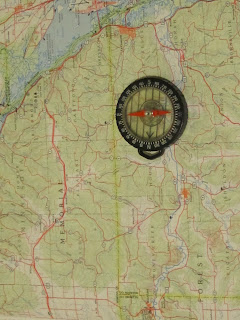
I like maps. Though I'm no cartographer, there's something about pouring over the details of a well-drawn map that I find irresistible. I've gotten lost in maps for hours. Having grabbed a back-issue of Backpacker magazine from the local library recently, I ran across this May, 2010, article on The Future of Maps and realized it was a perfect fit for mention on the Topophilian. Maps are going high-tech and interactive, but is citizen-sourced cartography reliable? Some top map-makers discuss this and more in the article.

Much of the discussion revolves around modern technology with acronyms like USGS, UTM, and of course GPS. Though technology adds new depth and dimension to old 2D versions, paper maps are not dead. Modern backpackers taking their high-tech gadgets into the wild often rely on paper maps in combo with GPS devices. As I read through the short group interview, I was struck by how technology has shaped, and is re-shaping, our collective sense of place regarding back-country adventure. It is mind-blowing.

Much of the early academic work on "place" stems from humanistic geography, looking at the conditions of rootedness and human relationships with land. One of the most conceptually and philosophically challenging courses I've taken was in the UW-Madison Department of Geography, where questions about the interface between people and places are still being unfolded on many fascinating levels.

But maps, back to maps. Still love 'em. In fact at Backpacker readers can create a custom topo for free as a trip planning tool or just for fun. If you're looking for me, that's where I'll be for a few hours.